A uniform shirt is worn eight or more hours a day, washed dozens of times a season, and seen by every customer your team talks to. That makes custom uniform shirts one of the few pieces of branding that has to perform like workwear and look like a dress shirt at the same time. This guide covers the decisions that matter — fabric, sleeve, color, logo, and ordering — so your work shirts still look right after the hundredth wash.
Why Button-Down Work Shirts (vs Polos and Tees)
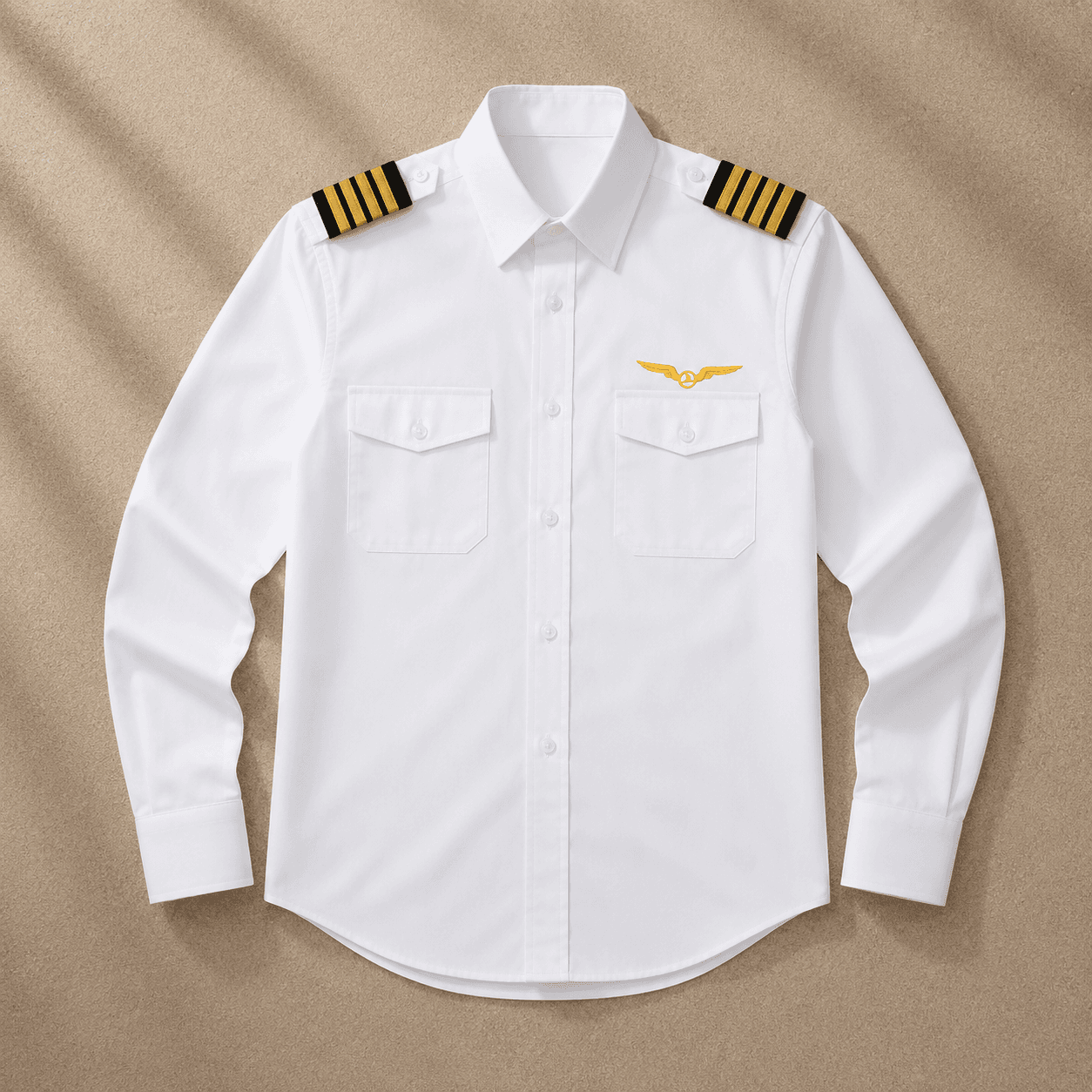
Polos and t-shirts work well for warehouses, events, and casual retail. But when employees face clients — at a front desk, in a cockpit, on a sales floor, or in an office — a button-down work shirt signals a different level of professionalism. A woven shirt holds its collar shape, layers under a jacket or vest, and takes details like epaulettes, flap pockets, and pen slots that knit garments can't.
Choosing the Right Fabric
Fabric decides how a uniform shirt feels at hour eight and how it looks after repeated industrial washing. The most common options:
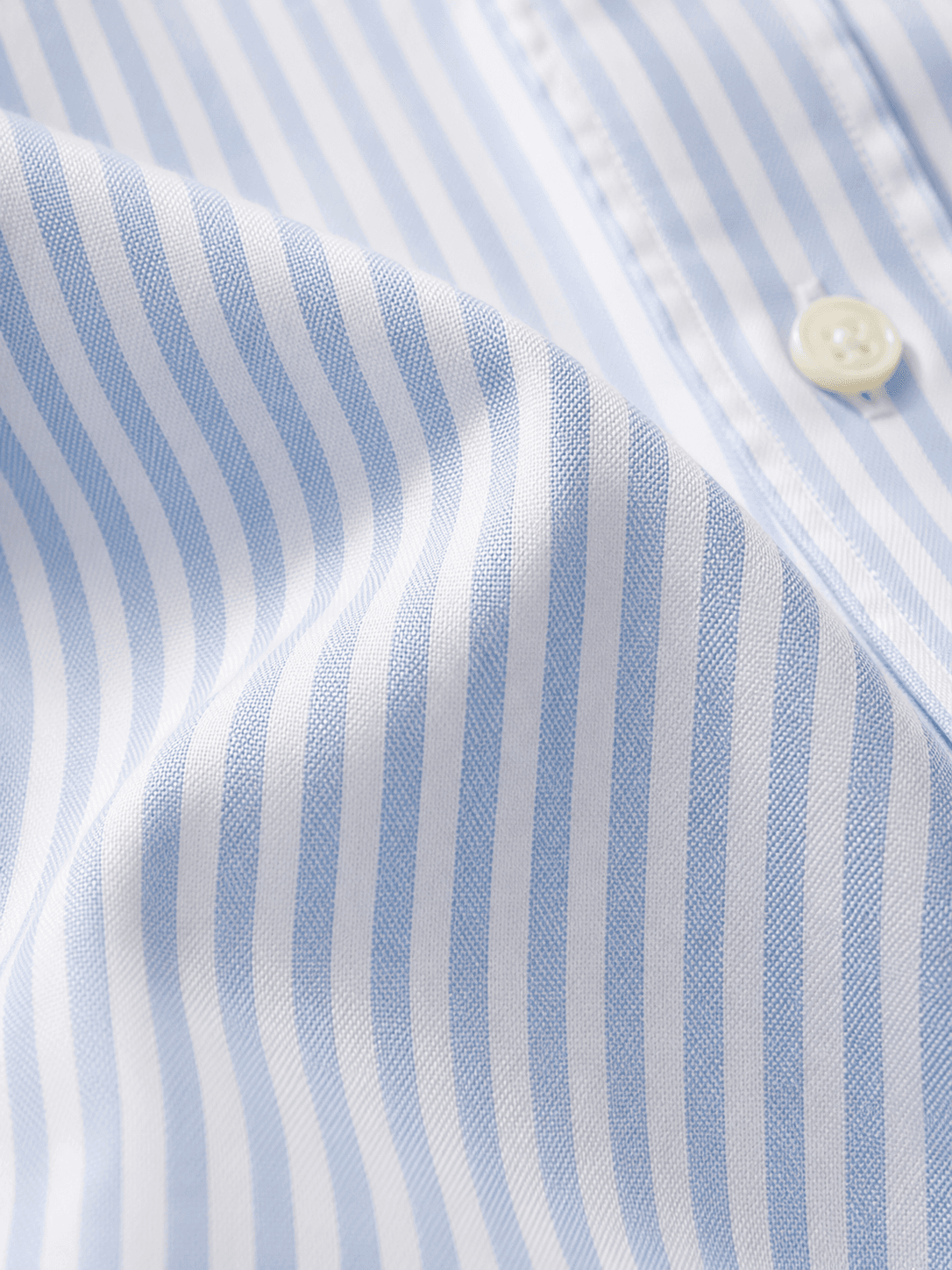
- Poplin: Smooth, lightweight, and crisp. The standard for office, corporate, and airline uniform shirts.
- Oxford: Heavier basket weave with a slightly textured look. Durable and forgiving — a good fit for retail and hospitality.
- Twill: Diagonal weave that resists wrinkles and drapes well. Holds a pressed look longer through the day.
- Poly-cotton blends (e.g. 65/35): The practical choice for most uniform programs. Polyester adds shrink resistance, color retention, and easy-care performance; cotton keeps the shirt breathable and comfortable.
For teams that wear the same shirt every day, an easy-care cotton blend is usually the right balance between comfort and durability. Ask your manufacturer for wash-test results on the exact fabric before committing to bulk.
Long Sleeve vs Short Sleeve Uniform Shirts
Long sleeve uniform shirts are the default for formal, client-facing roles and air-conditioned environments. Short sleeve work shirts suit warm climates, active roles, and summer rotations. Many uniform programs run both in the same fabric and color so teams can switch by season without breaking the look. Cuff style matters too — see our guide to shirt sleeve types for the details.
Colors: White Uniform Shirts and Brand Colors
A white uniform shirt is the most requested option for a reason: it reads as clean and professional, pairs with any trouser or jacket, and makes a colored logo stand out. Light blue is the next safest choice. Darker brand colors — navy, black, burgundy — hide wear and stains better but require fabrics with strong colorfastness so they don't fade unevenly across a team. Whatever you choose, lock the shade with a lab dip or fabric swatch so reorders match.
Embroidered Work Shirts vs Printed Logos
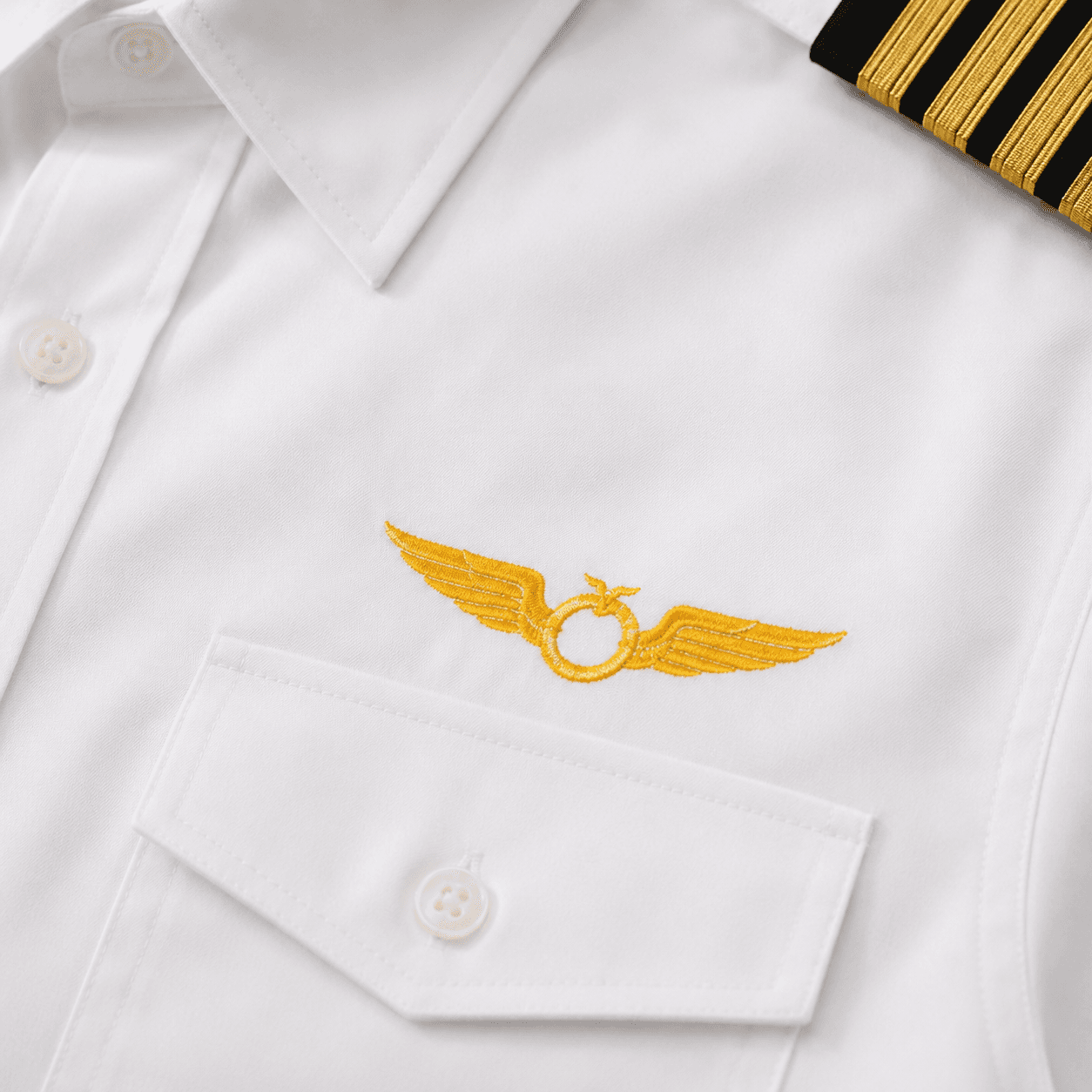
On a woven button-down, embroidery is almost always the better choice. An embroidered logo is raised, sharp, and survives industrial washing far longer than a print, which can crack or fade on shirting fabrics. Printing makes more sense for large, full-color graphics on casual garments.
Common logo placements on custom work shirts with a company logo:
- Left chest: The standard — above the pocket or where a pocket would sit.
- Sleeve: A secondary mark or department name on the upper arm.
- Back yoke: Below the collar, for visibility from behind.
- Collar or cuff: A small, subtle detail for premium corporate programs.
Uniform Shirts by Industry
- Corporate and office uniforms: Poplin or twill, long sleeve, white or light blue, with a small embroidered logo.
- Hospitality and hotel uniforms: Easy-care blends in brand colors, often in both sleeve lengths for front-of-house and service staff.
- Pilot and aviation uniform shirts: White or light blue, epaulettes, twin flap pockets, and precise sizing across a large crew — consistency from one order to the next is critical.
- Retail and customer service: Oxford or blended fabrics that stay presentable through long, active shifts.
Ordering Uniform Shirts in Bulk
Buying wholesale or bulk work shirts is a different process from buying off the rack. Before you place an order, plan for:
- MOQ: Minimum order quantities vary widely by manufacturer. We start production from 250 pieces per style and color, with smaller runs handled as custom production.
- Sampling: Approve a fit sample and the logo embroidery before bulk cutting begins.
- Size range:Build a size curve that covers your whole team, including women's fits and extended sizes.
- Reorders: New hires and replacements mean you will reorder. Work with a manufacturer that can repeat the same fabric, shade, and fit months later.
If you're evaluating factories, our guide to choosing a shirt manufacturer covers sampling, quality control, and export readiness in more depth.
Conclusion
The best custom uniform shirts are the ones your team is comfortable wearing and your brand is proud to show. Start with how and where the shirt will be worn, choose a fabric that survives daily washing, keep the logo embroidered and consistent, and partner with a manufacturer that can repeat the same shirt every time you reorder.